Automated vs Manual Bidding in 2026: The Ultimate Guide
A client's old agency once told him to 'just automate everything,' then watched Target ROAS bid up his own brand name to $4 a click for traffic manual CPC would have won for thirty cents. Automated and manual bidding aren't rivals. They're tools for different jobs, and this is the mix I actually run on client accounts in 2026.

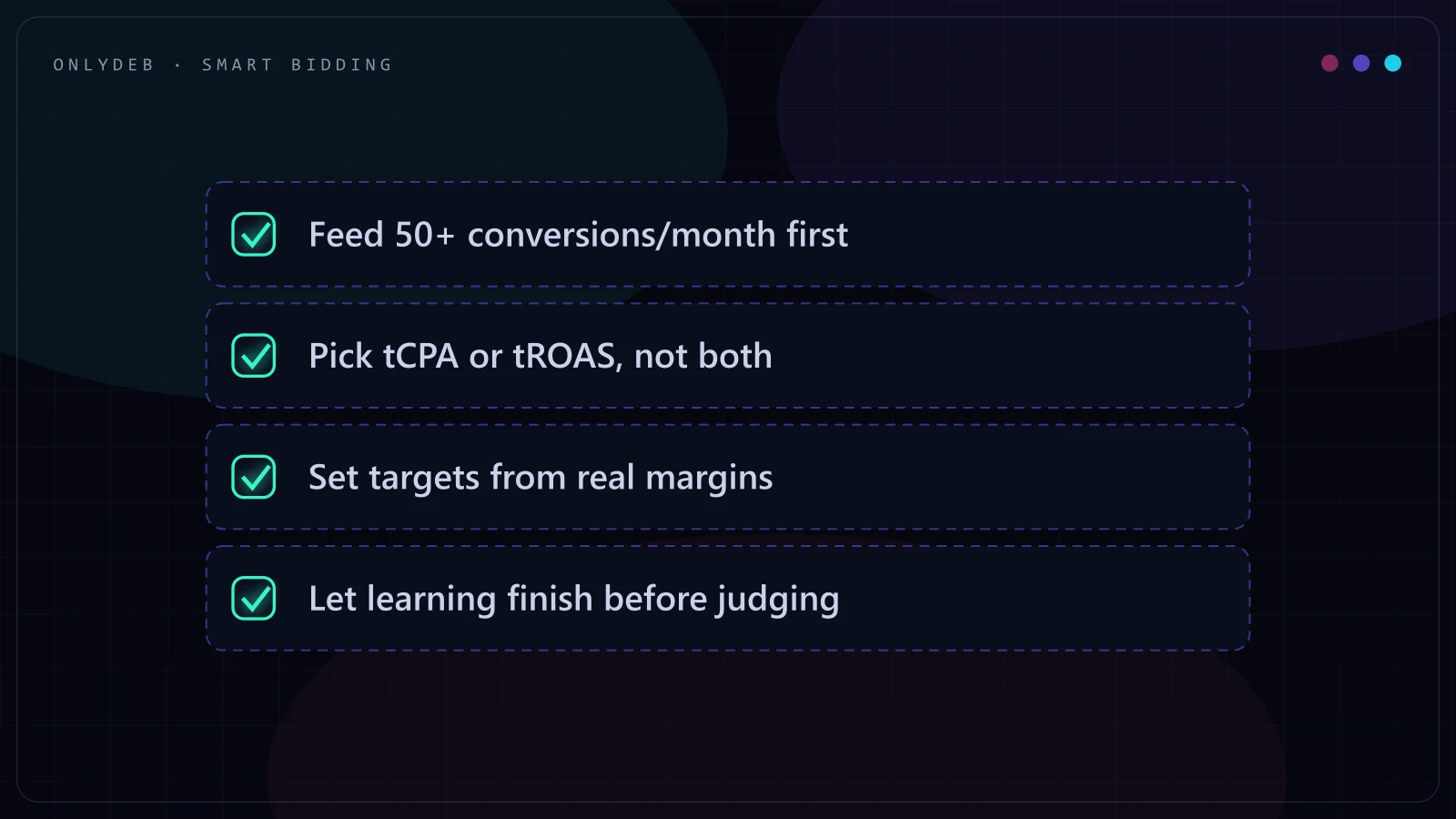
I've watched business owners swing to two extremes: hand every campaign to Smart Bidding and hope for the best, or refuse automation entirely because one algorithm scare burned them once. Both reactions cost money. The actual skill in 2026 is knowing exactly which campaigns deserve Google's machine learning and which ones still need a human hand on the wheel.
Automated bidding is when Google's machine learning sets your bid at each auction based on real-time signals like device, location, and search history. Manual bidding is when you set a fixed maximum cost-per-click yourself for each keyword instead. Most accounts benefit from running both at once, split deliberately by campaign type.
The Great Debate: Control vs. Intelligence
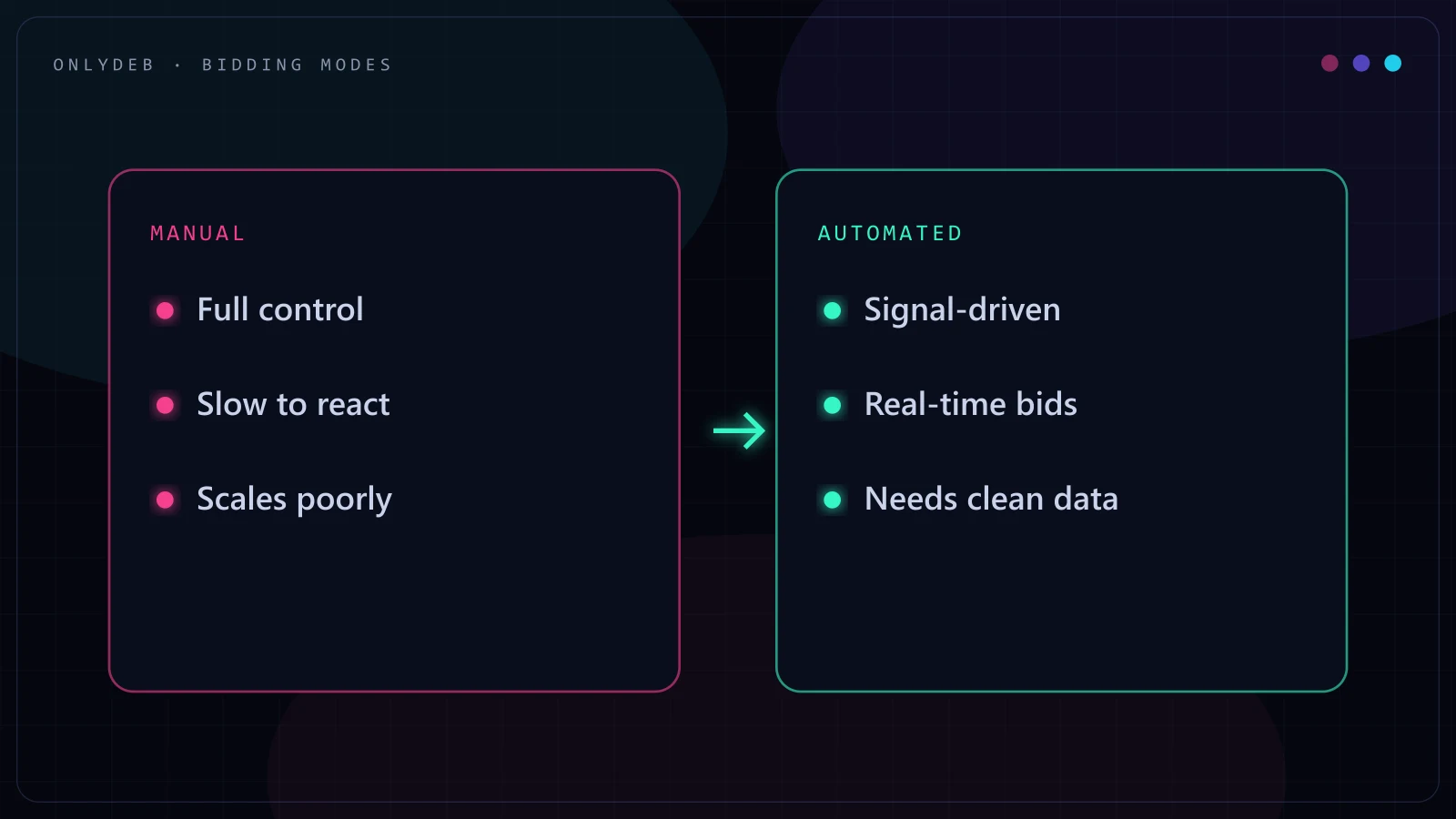
Automated (Smart) Bidding in 2026
Smart Bidding uses "auction-time bidding," analyzing millions of signals (device, location, time, browser, OS, language, prior search history) to set the perfect bid for that specific user at that specific moment.
I moved Black Voyage from manual bids to Target ROAS once we had enough conversion history, and ROAS climbed from 1.69 to 4.26 in four months. The algorithm found buying patterns across devices and times of day that I never would have caught adjusting bids by hand.
Manual Bidding in 2026
Manual CPC allows you to set a maximum cost-per-click for individual keywords. It's the "old school" method, but it still has a place in a sniper strategy.
On Mandarin Duck, I still run parts of the account with a deliberate, low-frequency touch instead of reacting to every daily fluctuation, and that account holds a 400% ROAS. Manual control still earns its place when you want to slow the algorithm down on purpose.
Stop guessing with your ad spend.
I build highly profitable Google Ads acquisition systems for ambitious brands. Stop burning cash on broad match and let's scale your ROAS properly.
The 2026 Playbook: When to Use Which?
| Scenario | Recommended Strategy | Why? |
|---|---|---|
| Brand Campaigns | Manual CPC | Don't overpay for your own name. Ensure position #1 at lowest cost. |
| New Campaign (No Data) | Maximize Clicks (with Cap) or Manual | Drive traffic to build data foundation before switching to smart bidding. |
| Established Lead Gen | Target CPA | Focus on cost per result. Let AI find the leads. |
| E-Commerce / ROAS Goal | Target ROAS | Optimize for cart value, not just number of sales. |
The Hybrid Approach (The Secret Weapon)
I don't make clients choose just one. In my experience, the best accounts run a portfolio approach.
Bloomstories runs on $100K+ in monthly budget at a 350% ROAS using close to this exact split: automated bidding on broad prospecting where volume gives the algorithm enough to learn from, manual control on brand terms where I don't want the algorithm guessing.
Internal Links
Conclusion
In every account I manage, resisting automation is a losing battle, but blindly trusting it is a budget hazard. I run Smart Bidding for scale and Manual Bidding for precision checking, side by side, not one or the other.
Unsure which is right for your account? Get a free campaign audit.