Google Ads Conversion Tracking Setup for 2026
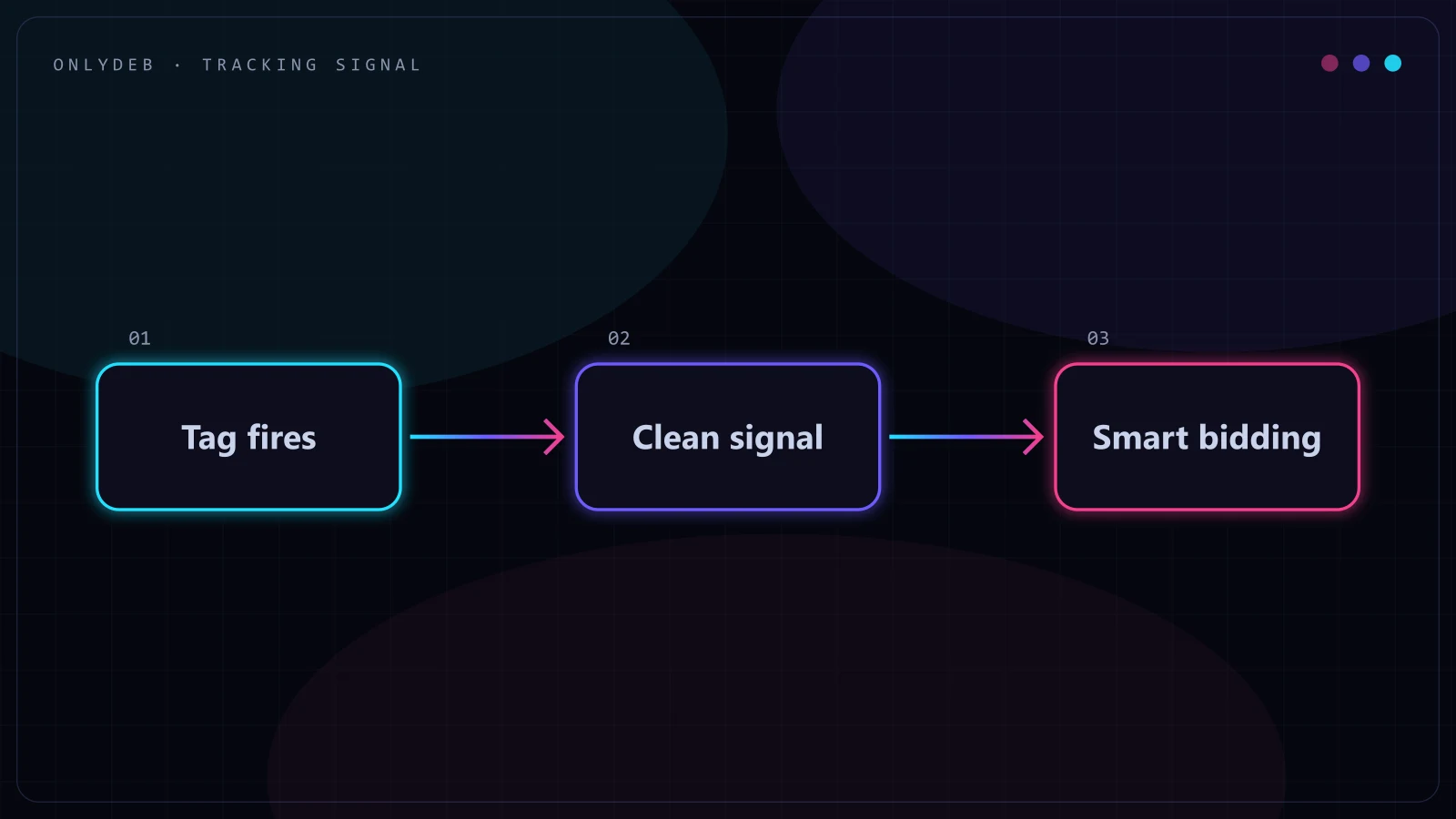
Every failed 'AI-powered' campaign I've been asked to rescue had the same autopsy result: Smart Bidding was learning from broken conversion data. Duplicate tags, micro-conversions marked primary, offline sales never imported. Get the tracking right and the automation finally earns its keep. Here's the setup I use.

Why Conversion Tracking Is Your PPC Foundation in 2026
The first thing I do when a new client tells me "Google Ads doesn't work for us" is open their conversion actions. Nine times out of ten I find the same crime scene: a duplicate tag double-counting purchases, a newsletter signup marked primary, and a Smart Bidding strategy faithfully optimizing toward all of it. The AI wasn't broken. It was obedient.
Google Ads conversion tracking is the process of measuring which ad clicks lead to valuable customer actions: purchases, form submissions, phone calls, or app installs. In 2026, accurate conversion tracking is the single most important factor determining whether Google's AI-powered Smart Bidding helps or hurts your campaigns. Businesses with clean conversion data typically see 25-40% better ROAS than those with misconfigured tracking.
The highest ROAS I've ever hit on an account, a 900% peak on an e-commerce brand, only happened after I rebuilt that account's conversion tracking from the ground up so Smart Bidding was learning from clean, deduplicated signals instead of guesswork.
Funnel-Aligned Conversion Tracking Blueprint
TOFU: Micro-Conversions (Audience Builders, Never Primary Goals)
- Track video views, newsletter signups, downloads.
- Use these only for building remarketing lists or audience insights.
- AI safeguard: Always mark as secondary conversions. Don't let Smart Bidding optimize for these.
MOFU: Qualified Engagements
- Form fills, calls, and chats, tracked via GTM or dedicated thank-you URLs.
- Enable Enhanced Conversions (hashed email/phone data) for better attribution.
- AI safeguard: Prioritize these for lead gen campaigns, but audit regularly to ensure AI is optimizing properly.
BOFU: Revenue + Final Conversions
- E-commerce sales (dynamic values).
- Offline conversion imports (phone/in-store sales closed after ad click).
- Enhanced Conversions across all BOFU actions.
- AI safeguard: These should be your primary conversions for Smart Bidding.
Real Pitfalls + Solutions
Managing more than 400 advertiser accounts a quarter inside Google's Operations Center, I watched the same mistake repeat across industries: teams optimized toward vanity conversions and called it progress, while revenue barely moved.
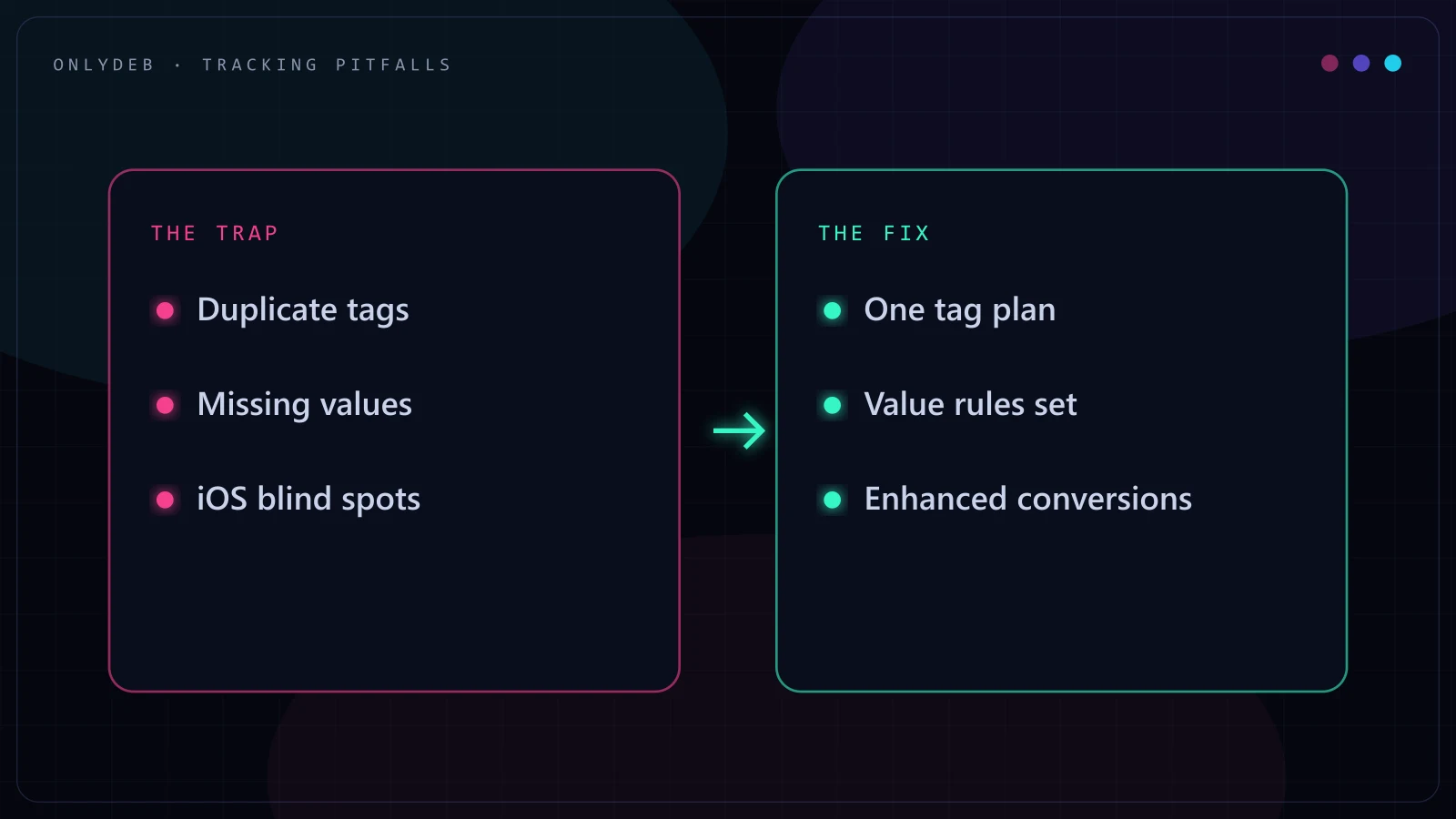
| Pitfall | Solution |
|---|---|
| AI optimizes for micro-conversions | Mark as secondary conversions; set primary = revenue actions |
| GA4 imports only → undercounted data | Use native Google Ads tags + Enhanced Conversions |
| AI runs unchecked on bad data | Audit Diagnostic, auction insights, conversion paths bi-weekly |
| Agencies overreport with vanity metrics | Align reports to real revenue + qualified leads |
Advanced Setup Tactics
Stop guessing with your ad spend.
I build highly profitable Google Ads acquisition systems for ambitious brands. Stop burning cash on broad match and let's scale your ROAS properly.
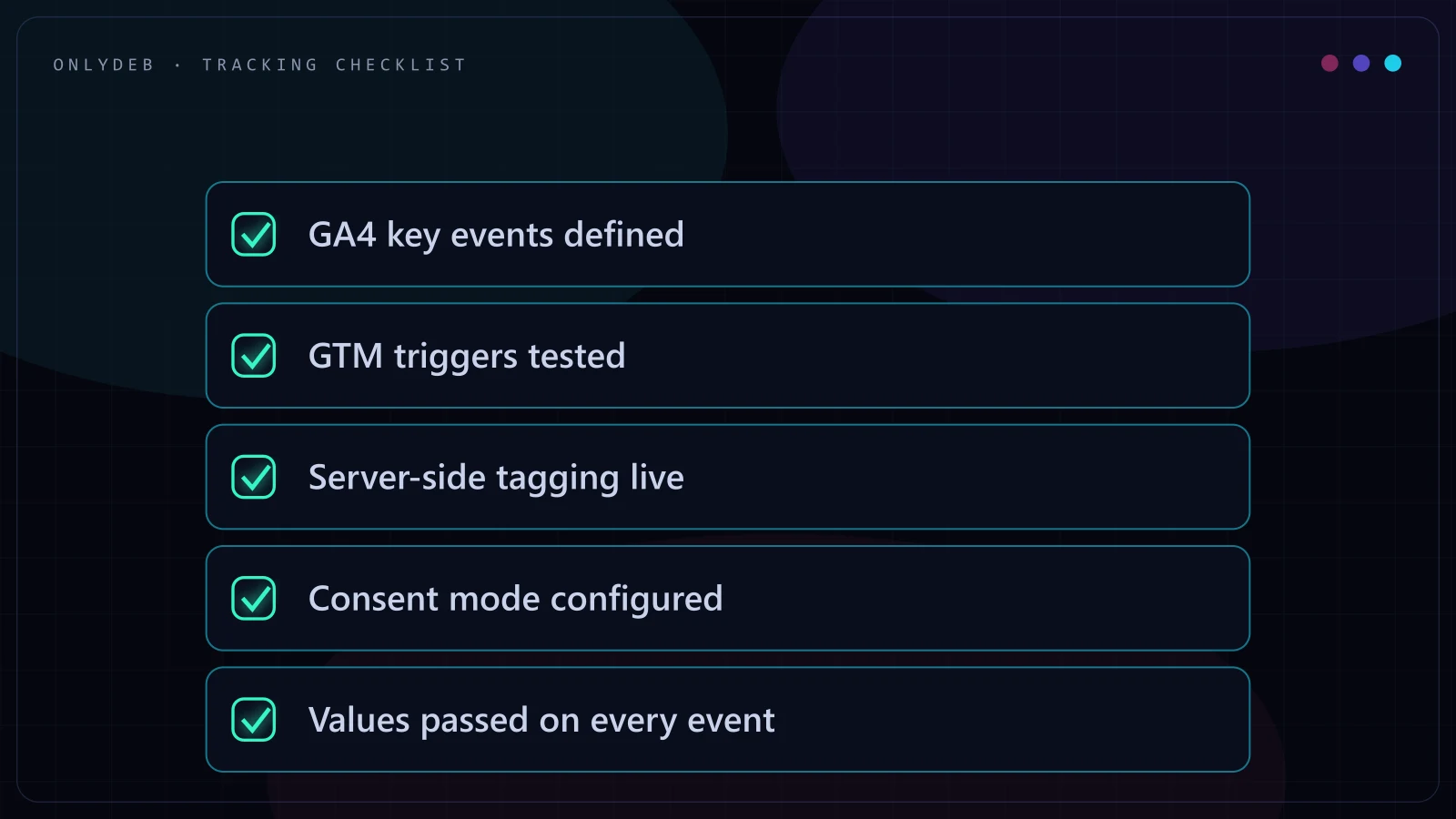
The 2026 Conversion Tracking Setup Checklist
Advanced Tracking Techniques for 2026
E-commerce Focus
- Dynamic remarketing with product IDs
- Customer lifetime value tracking
- Cart abandonment recovery sequences
- Cross-device purchase attribution
Lead Generation Focus
- Call tracking with dynamic number insertion
- Form completion with lead scoring
- CRM integration for closed-won tracking
- Multi-touch attribution modeling
Internal Links
Final Thoughts
In 2026, great PPC campaigns start with great conversion tracking, not with ads. At OnlyDeb, we help small businesses set up conversion tracking that fuels smart AI bidding and protects your budget. Let's get it right.