Your Great ROAS Might Be Branded Search: The 5-Minute Check
A great blended ROAS can hide a business that barely breaks even on new customers. Here's the 5-minute check that separates the two, and why almost nobody running your account volunteers to show you the split.

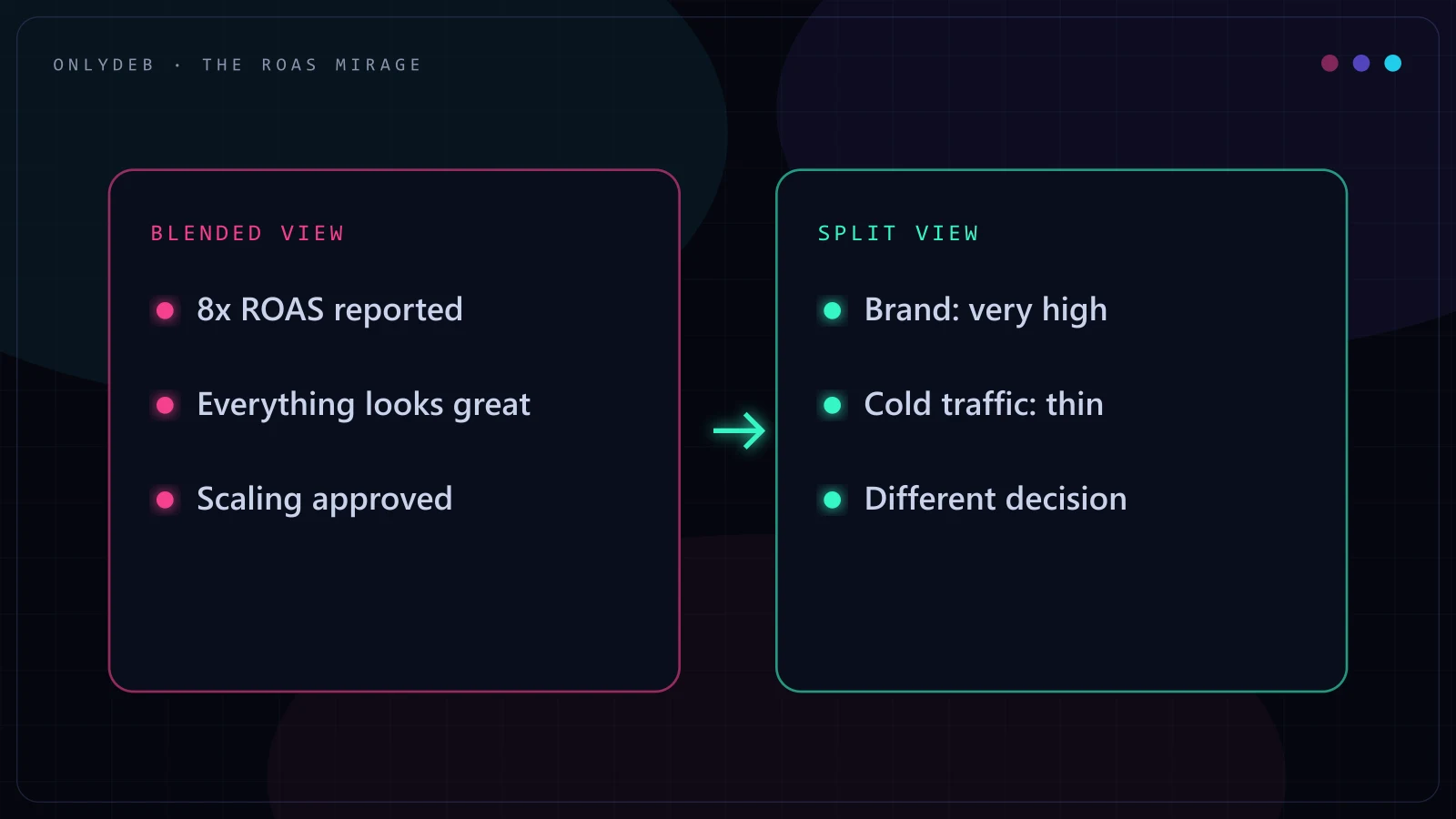
I've opened more accounts than I can count where the top-line ROAS looked excellent, and the client was, reasonably, happy. Then I segmented one thing, brand versus non-brand, and the picture changed completely. Not because anything was broken. Because the number everyone was celebrating was never measuring what they thought it was measuring.
Branded search ROAS is the return on ad spend generated by people searching your business or product name directly, people who in most cases had already decided to buy before they ever typed anything into Google. Blend that traffic into your overall account ROAS and you get a number that looks great on a dashboard while telling you almost nothing about whether your ads are actually winning new customers.
Why This Split Gets Skipped
Nobody sets out to hide this on purpose, usually. It's just that a single blended ROAS number is simpler to report, and it's the number that makes an account look best. An agency showing you 6x ROAS across the whole account has a much easier renewal conversation than one showing you 6x blended and 1.4x on the cold campaigns actually meant to bring in new customers. The second version is more honest and a much harder sell, so the split quietly never comes up unless the client asks for it.
I've inherited accounts built exactly this way. The Shopify rebuild I've written about elsewhere is the clearest example: branded exclusions were part of getting that account from a 1.69 to a 4.26 ROAS, and part of the reason the earlier number looked worse on paper for a while was that it had stopped quietly borrowing performance from branded traffic. The real number went up. The illusion went down first.
Stop guessing with your ad spend.
I build highly profitable Google Ads acquisition systems for ambitious brands. Stop burning cash on broad match and let's scale your ROAS properly.
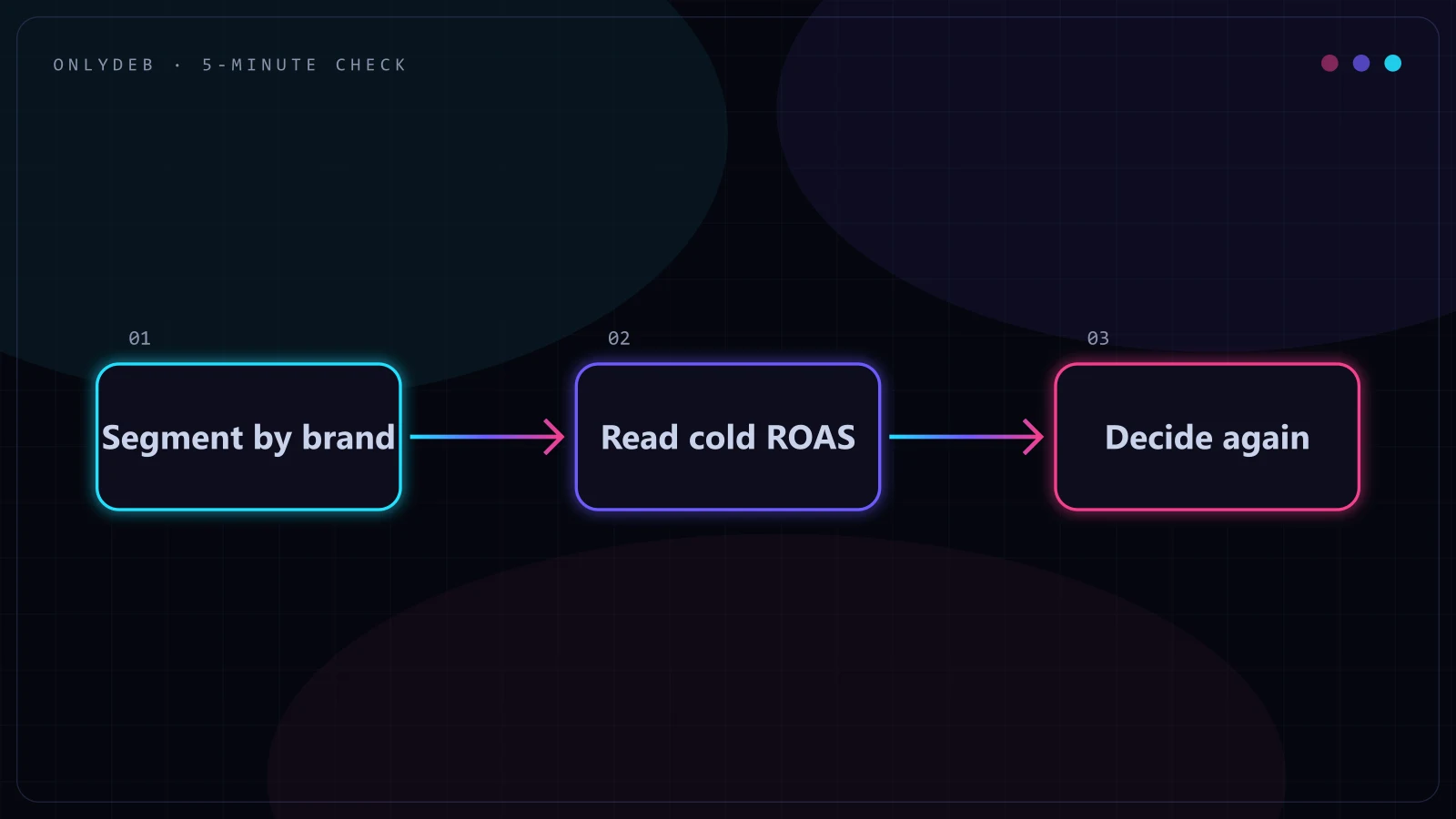
The 5-Minute Check
This doesn't require a new tool or a reporting rebuild. It takes about five minutes inside the Google Ads UI you already have open.
- Segment by search term or campaign name. Go to Campaigns, then the Search terms report (or, if your account structure already separates branded campaigns, filter by campaign name). Search for your brand name and close variants, including common misspellings.
- Pull branded traffic into its own view. Filter or segment so you have branded search terms isolated from everything else. Note spend, conversions, and conversion value for that slice alone.
- Read the non-branded, cold number separately. Everything left after you remove brand terms is your cold acquisition ROAS, the number that reflects whether your ads are winning people who didn't already know you.
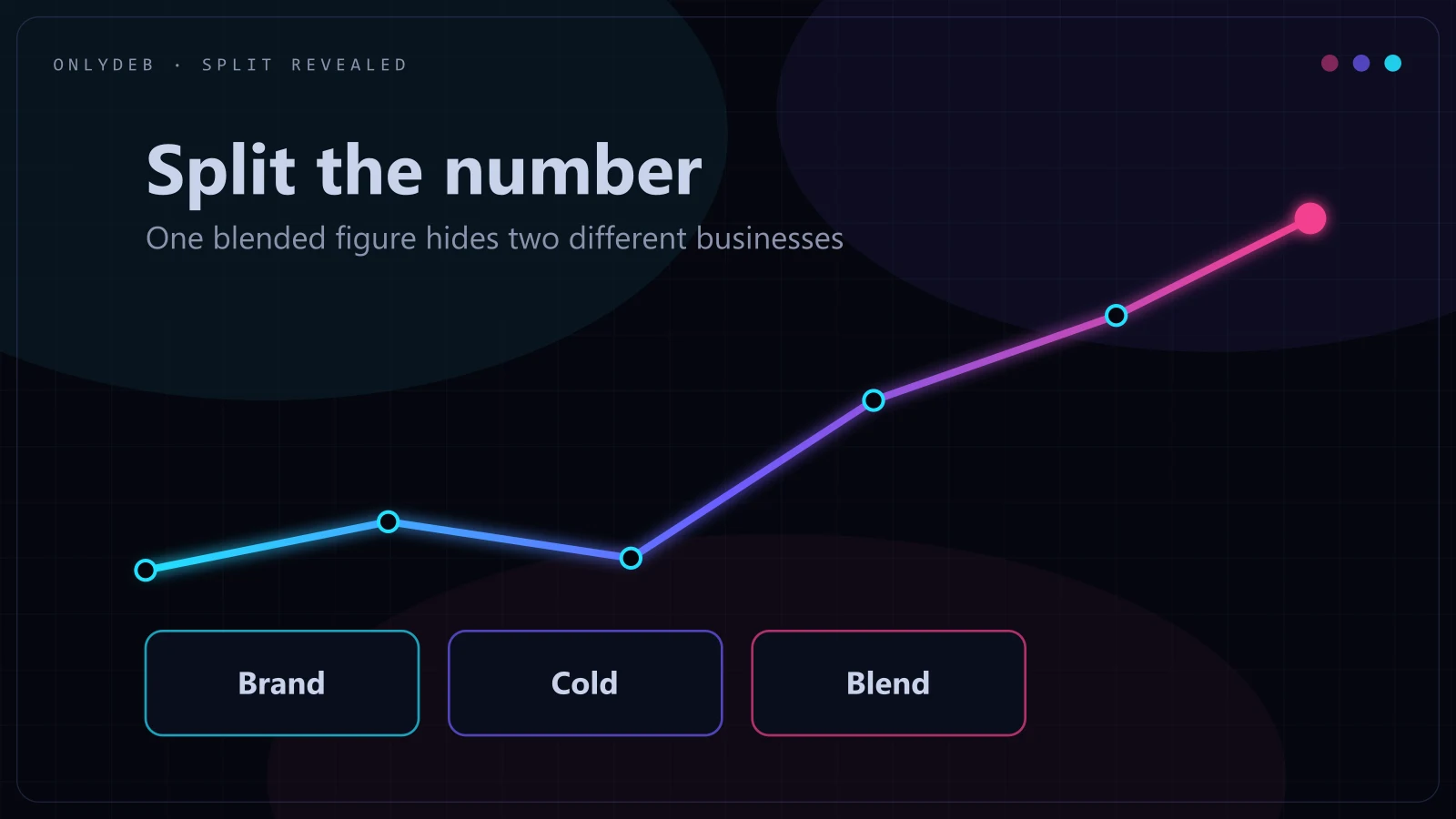
- Compare the two side by side. A wide gap, blended ROAS looking strong while cold ROAS sits near or below breakeven, tells you the account's real growth engine is smaller than the top-line number suggests.
- Re-ask every scaling decision against the cold number. Before you increase budget, add a new campaign, or greenlight more spend based on "ROAS is great," ask whether that ROAS survives once brand is removed. That's the number that should be driving the decision, not the blended one.
When Branded Ads Are Still Worth Running
None of this means branded search campaigns are a waste. There are two legitimate reasons to keep them running, and both are about defense and control, not growth.
- Competitor conquesting on your name: If a competitor is bidding on your brand terms, an empty auction on your own name hands them the click. Running your own branded ad protects that traffic from being intercepted.
- Controlling the message and destination: A branded ad lets you decide exactly what headline, offer, and landing page a branded searcher sees, instead of leaving it to whatever organic result happens to rank that week.
Both of those are fine reasons to spend on brand. Neither of them is a reason to report branded ROAS as evidence that your growth campaigns are working. Keep the spend if the defense makes sense for your category, just keep the number in its own column.
The account looks brilliant. The cold acquisition underneath it may be barely holding its own.
What Honest Reporting Looks Like
Honest reporting shows branded and non-branded as two separate lines, every time, not folded into one headline figure. It states the cold number plainly even when it's thin, because a thin cold ROAS with a clear plan to improve it is a better position than a strong blended number built on a foundation nobody checked. And it explains scaling, budget increases, and new campaign launches against that cold number specifically, since that's the traffic actually doing the work of growing the business rather than just collecting demand that already existed.
That Shopify rebuild is the clearest documented example I can point to. Branded exclusions weren't the whole story of that turnaround, tracking fixes and Merchant Center cleanup mattered just as much, but they were part of making sure the ROAS the client saw at the end reflected real, cold performance instead of a number partly propped up by people who'd have bought anyway. If you want the full sequence, including the PMax and Shopping structure changes that came after tracking was fixed, I go through it step by step in my guide to PMax brand traffic exclusions.
This 5-minute check is also just one piece of reading an account honestly. If you want the fuller monthly routine, spend next to results, the search terms report as truth serum, the questions that make a bad agency squirm, I cover that in how to read your Google Ads reports without getting fooled. And if you want to feel this effect with sliders instead of spreadsheets, the Incrementality Notebook lets you watch a blended ROAS number flatter an account in real time.
Google publishes its own documentation on setting up brand exclusions and brand lists for Performance Max, if you want to apply this at the campaign level yourself.
FAQ
What is branded search ROAS?
Branded search ROAS is the return on ad spend generated by people searching your business or product name directly, as opposed to generic, category, or competitor terms. Because these searchers already know who you are and often already decided to buy, this traffic tends to convert cheaply and skews blended account ROAS upward.
Why does branded search convert so much better than cold traffic?
Someone typing your brand name into Google has usually already found you through another channel, referral, past purchase, an ad they saw somewhere else, and is searching to get back to you, not to discover you. The ad barely influences that decision. Cold, non-branded traffic hasn't made that decision yet, so it has to do the actual work of convincing someone, which is a harder job with a lower conversion rate by nature.
Should I stop running ads on my own brand name?
Not automatically. Branded ads are worth keeping when competitors are bidding on your name to intercept your own customers, or when you need to control the message and destination URL rather than leaving it to whatever organic result ranks. Running branded ads is fine. Reporting their ROAS blended with cold acquisition as if it proves the cold campaigns are working is the actual problem.
How does Performance Max make this worse?
PMax bids across Search, Shopping, Display, and YouTube inside one campaign, and by default it can serve on your own brand terms without that being broken out anywhere in the standard reporting view. Without brand exclusions or a brand list applied, a PMax campaign can quietly absorb a large share of your existing branded demand and report it as new performance, inflating the campaign's ROAS with traffic that was never at risk of not converting.
What does honest branded vs non-branded reporting look like?
Honest reporting shows branded and non-branded performance as two separate lines, not one blended number. It states the cold-acquisition ROAS plainly, even when that number is thin, and it explains scaling decisions against the cold number rather than the blended one. If a report or an agency can't show you that split on request, treat that as a signal to ask for it directly.
If your dashboard says one thing and you've never actually seen the brand versus non-brand split for your own account, that gap is worth closing before you approve the next budget increase. Get in touch and I'll walk through what your account looks like once it's split.